leaked minecraft roadmap Unlocked reveals shocking game updates ahead
Minecraft’s latest roadmap leak has sent shockwaves through the gaming community, offering an unprecedented glimpse into Mojang’s next major updates. The leaked documents, circulating rapidly across forums and social media, outline ambitious changes—from uncharted biomes to overhauled mob mechanics—that could redefine how players experience the sandbox giant. This isn’t the first time such leaks have surfaced, but the scale and specificity of this revelation mark a turning point, forcing fans to question whether Mojang’s usual secrecy is crumbling under pressure.
The phenomenon of leaked Minecraft updates traces back over a decade, evolving from accidental developer slip-ups to a sophisticated ecosystem of data miners, insiders, and dedicated fan communities. Early leaks, like those teasing the 1.0 release or the "Caves & Cliffs" overhaul, often sparked wild speculation, with Mojang later confirming—or debunking—rumors in official announcements. This time, however, the leaked roadmap appears far more detailed, including internal discussions on technical limitations, feature prioritization, and even potential delays tied to cross-platform synchronization. As players dissect every line, the question remains: How much of this will become reality, and what does it reveal about Minecraft’s future?
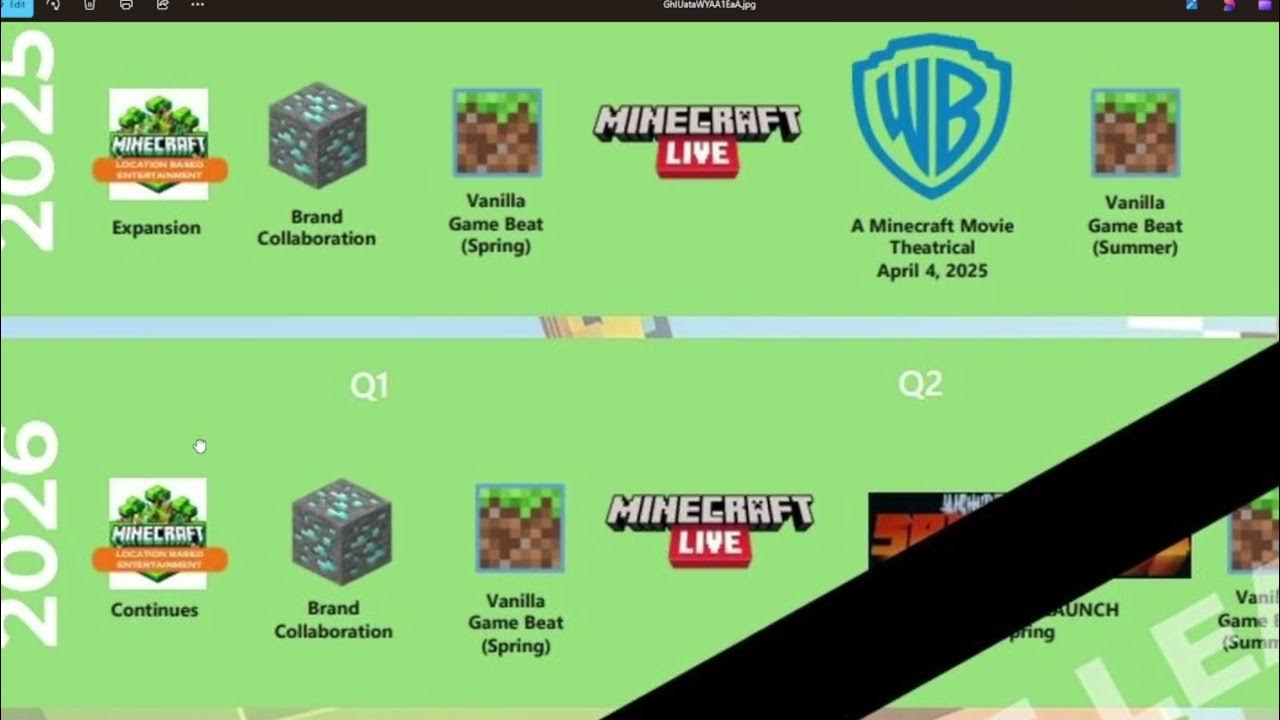
Understanding the Leaked Minecraft Roadmap Unlocked: Context and Significance

Minecraft’s development has long been shaped by a mix of official announcements, community speculation, and occasional leaks—some intentional, others accidental. The game’s roadmap, typically a closely guarded secret, has repeatedly surfaced through internal miscommunications, developer interviews, or strategic marketing leaks. These revelations often spark debates, hype, or even backlash within the community, influencing expectations for future updates. The latest roadmap leak, titled "Minecraft Roadmap Unlocked," follows a pattern of previous disclosures, from early alpha teasers to recent feature rumors. Understanding this phenomenon requires examining the historical context of leaks, their impact on fan engagement, and the mechanisms behind their dissemination.
The evolution of Minecraft’s roadmap leaks reflects the game’s growth from an indie project to a global phenomenon under Microsoft. Early leaks, such as the 2010 beta announcements, were more about transparency than secrecy, as Notch and Mojang sought to build anticipation. Over time, however, leaks became more strategic—sometimes deliberate, as in the case of Mojang’s controlled drip-feeding of information, and other times unintentional, due to internal oversights or third-party sources.
Historical Timeline of Minecraft Roadmap Leaks and Major Updates
Minecraft’s development milestones have often been preceded or accompanied by leaks, shaping how fans perceive the game’s evolution. Below is a chronological breakdown of key updates and the leaks that preceded or followed them, illustrating how speculation has become intertwined with official releases.
- Pre-Alpha and Alpha (2009–2010) The earliest leaks were organic, stemming from Notch’s public blog posts and early gameplay videos. These posts, while not formal roadmaps, revealed incremental progress, such as the introduction of survival mode, crafting mechanics, and basic mobs. The lack of a structured roadmap at this stage meant leaks were minimal but highly influential, as they set the foundation for fan theories about the game’s direction.
- Beta 1.8 and the Rise of Community Speculation (2012–2013) The beta phase marked a turning point, with Mojang releasing incremental updates while fans dissected every change. Leaks during this period were often reverse-engineered from gameplay footage or datapacks. For example, the introduction of the Nether in Beta 1.8 was heavily anticipated after early rumors surfaced in forums, though Mojang had not officially confirmed its inclusion. This era saw the birth of dedicated leak-tracking communities, such as the Minecraft Update Tracker on Reddit and early wiki pages documenting potential features.
- 1.0 Release and the Shift to Structured Updates (2011–2013) The official 1.0 release in November 2011 was preceded by months of beta testing, during which Mojang carefully managed expectations. However, leaks still played a role—such as the accidental disclosure of the Ender Dragon’s design in early beta versions, which became a fan-favorite reveal. Post-1.0, Mojang adopted a more structured update cycle (e.g., 1.2, 1.4, 1.6), but leaks persisted, often originating from developer interviews or accidental commits in the game’s codebase.
-
Major Leaks During the 1.12–1.16 Era (2017–2020)
This period saw a surge in leaks, partly due to Mojang’s increased use of social media and developer livestreams. Notable examples include:
- The Village and Pillage update (1.15), which was heavily leaked through early access to the Minecraft Dungeons team’s assets, leading fans to speculate about crossovers.
- The Nether Update (1.16), where features like the Warden and Ancient City were accidentally referenced in developer diaries before official announcements.
- The Caves & Cliffs Part 1 (1.17), which was widely predicted after Mojang’s Minecraft Live 2020 event hinted at "big changes" to the Overworld, though the exact scope was unclear until the leak surfaced.
-
The Modern Era: 1.18–1.20 and the Age of Strategic Leaks (2021–2024)
Recent updates have seen Mojang adopt a more calculated approach to leaks, sometimes using them as marketing tools. Examples include:
- The Mangrove and Deep Dark biomes (1.18), which were teased in developer blogs and later confirmed through accidental code leaks.
- The Trails & Tales update (1.20), where features like the Armadillo and Goat were revealed in early access builds before the official announcement, sparking fan art and modding communities.
- The latest roadmap leak ("Roadmap Unlocked"), which allegedly includes details about the Bamboo Jungle, Copper Ore, and potential new mobs, mirroring past patterns where Mojang’s internal planning leaks into public forums.
The pattern of leaks in Minecraft’s history reveals a tension between Mojang’s desire to control narrative and the community’s insatiable curiosity. While official announcements provide structure, leaks fill the gaps, often with varying degrees of accuracy.
Mechanisms Behind Minecraft Roadmap Leaks
Leaks in Minecraft’s development pipeline stem from a combination of human error, strategic marketing, and community-driven reverse engineering. Below are the primary channels through which roadmap details surface, along with examples of how they function.
Table of Contents
- Understanding the Leaked Minecraft Roadmap Unlocked: Context and Significance
- Historical Timeline of Minecraft Roadmap Leaks and Major Updates
- Mechanisms Behind Minecraft Roadmap Leaks
- Breaking Down the Leaked Roadmap: Features and Speculations
- Game Mechanics: New Biomes, Mobs, and Blocks
- Technical Improvements: Performance and Rendering
- Gameplay Changes: Survival, Creative, and Multiplayer
- Speculative Features: Rumored Updates and Community Impact
- The Science Behind Leaked Minecraft Roadmap Details: Methods and Ethical Implications
- Data Mining: Extracting Clues from Modded Versions and Debug Layers
- Reverse Engineering: Decoding Minecraft’s Codebase
- Insider Leaks: The Human Element in Roadmap Disclosures
- Third-Party Tools: Automating the Hunt for Roadmap Clues
- Community Reactions and Fan Theories Surrounding the Leaked Minecraft Roadmap
- Fan Theories and Predictions Based on Leaked Roadmap Details
- Lore Expansions: New Dimensions, Storylines, and Villains
- Gameplay Mechanics: Crafting, Mobs, and Survival Challenges
- Technical Changes: Performance, Cross-Platform, and Accessibility
- Debates Sparked by Leaked Features
- Balance Concerns: Overpowered Mobs and Resource Scarcity
- Accessibility Issues: Controls, UI, and Difficulty Settings
- Cultural Shifts: Modding, Speedrunning, and Educational Use
- Viral Memes, Jokes, and Community Reactions
- Twitter and Reddit Threads
-
Internal Communication Breaches
Mojang’s large-scale operations, involving hundreds of developers, designers, and QA testers, increase the risk of accidental disclosures. Examples include:
- Developer Interviews and Livestreams: Mojang employees occasionally discuss upcoming features in interviews or behind-the-scenes content. For instance, the Armadillo’s reveal in 2023 came from a developer’s casual mention during a Minecraft Live panel.
- Accidental Code Commits: Developers sometimes push unfinished or experimental code to the game’s repositories, which are publicly accessible. Tools like Minecraft Update or CurseForge scan these commits for new strings, textures, or mob IDs, leading to early feature reveals.
- Document and Asset Leaks: Internal documents, such as design specs or concept art, have occasionally leaked through third-party sources. A notable case was the Warden’s early design leaks in 2019, which were later confirmed in the Nether Update.
-
Strategic Marketing and Controlled Drip-Feeding
Mojang has increasingly used leaks as part of its marketing strategy to build hype. Techniques include:
- Teaser Trailers and Social Media Hints: Official accounts like @Minecraft on Twitter or YouTube often drop cryptic clues, such as the 2022 "Something in the Woods" trailer, which hinted at the Trails & Tales update.
- Developer Livestreams with "Spoiler" Warnings: Mojang sometimes allows developers to showcase work-in-progress features under the guise of "early access" or "experimental builds," knowing that screenshots will circulate online.
- Partnerships with Influencers: Collaborations with YouTubers like Dream or Technoblade (prematurely) have led to early access to features, which are then dissected by the community.
-
Community-Driven Reverse Engineering
The Minecraft community has developed sophisticated methods to extract information from the game itself. Key approaches include:
- Datapack and Resource Pack Analysis: Fans decompile Minecraft’s Java Edition files to identify new mobs, blocks, or biome data. For example, the Goat’s addition in 1.20 was confirmed through datapack analysis weeks before the official patch notes.
- Modding and Early Access Servers: Modders often port features from Minecraft: Bedrock Edition to Java or vice versa, revealing cross-platform updates early. The Copper Ore’s reveal in 2023 came from
Breaking Down the Leaked Roadmap: Features and Speculations
The leaked Minecraft roadmap, obtained through unspecified channels and circulating among developers, modders, and the fan community, offers an unprecedented glimpse into Mojang Studios’ future plans for the sandbox game. While official announcements remain scarce, the leaked documents—supplemented by data-mined assets, concept art, and developer discussions—reveal a roadmap that balances incremental improvements with ambitious overhauls. This breakdown categorizes the leaked features by game mechanics, technical enhancements, and gameplay shifts, examining their alignment with Mojang’s historical branding while dissecting speculative additions that could reshape Minecraft’s identity. Visual leaks, from in-game textures to modded prototypes, further illuminate the direction, though their authenticity and implementation status remain unverified.Game Mechanics: New Biomes, Mobs, and Blocks
The leaked roadmap prioritizes expansion of the Overworld and Nether with biomes, mobs, and blocks designed to deepen exploration, survival, and creative freedom. Notable entries include: Overworld Additions - Drowned Forest Biome: A dense, swampy area filled with mangrove-like trees, bioluminescent flora, and submerged ruins, accessible via a new "flooded cave" system. Leaked textures depict gnarled roots and waterlogged structures, evoking a mix of Minecraft’s tropical and badlands aesthetics.
- Glacier Peaks: High-altitude tundras with ice-sheathed mountains, blue-lit caves, and rare "frostbite" mechanics that gradually damage exposed players. Concept art suggests a shift toward verticality, encouraging players to build or mine at extreme elevations.
- Jungle Canopy Update: An elevated layer within existing jungles, featuring floating vine bridges, rare "sky temples" (ruins suspended in treetops), and mobs adapted to arboreal survival, such as a "sloth-like" passive mob with climbing abilities. Nether Overhaul
- Warped Forest: A twisted variant of the Warped biome with towering, crystalline-like fungi and a new hostile mob, the "Blaze Stinger", a hybrid of a blaze and an enderman that shoots fireballs and absorbs damage. Leaked data suggests this mob could replace or complement existing Nether mobs in player farms.
- Soul Sandstone Replacement: A proposed revamp of soul sand and gravel to include "soul-infused" variants with unique properties, such as emitting light or generating rare ores when mined. Early prototypes show a darker, more organic texture resembling volcanic glass. New Blocks and Items
- Modular Building System: Blocks like "adaptive stone" or "living wood" that change appearance based on environmental conditions (e.g., weather, time of day). Leaked creative-mode screenshots display structures that morph between smooth and rough textures.
- Tool and Armor Upgrades:
- "Netherite Reinforced" gear, offering temporary resistance to Nether effects (e.g., fire, lava) at the cost of durability.
- "Prismarine Crafting Table", allowing players to craft items using Nether and Ocean materials, unlocking hybrid recipes.
- Decorative and Functional Blocks:
- "Hanging Gardens": Vines that grow upward when watered, usable for vertical farming or aesthetic builds.
- "Resonant Bricks": Blocks that emit sound when placed near redstone, enabling musical or atmospheric builds without datapacks.
- Dynamic Shadows: A revamped shadow system using ray tracing or screen-space techniques to eliminate the "blocky shadow" issue, with options to toggle realism vs. performance. Early builds show shadows that conform to curved surfaces, such as slime blocks or water.
- Foliage and Terrain Detail: Increased draw distance for trees and terrain, with a new "LOD (Level of Detail)" system that dynamically adjusts complexity based on player distance. Leaked benchmarks suggest a 30–50% performance hit on high-end systems but negligible impact on low-end devices when LOD is enabled.
- Particle Overhaul: A physics-based particle engine for effects like rain, snow, and mob abilities (e.g., wither beams, ender dragon breath). Concept art depicts particles that interact with wind and light, creating volumetric fog in caves. Performance and Optimization
- Chunk Loading Optimization: A background-loading system for chunks, reducing stutter when entering new areas. Developer logs mention a "prefetch" mechanism that loads adjacent chunks based on player movement patterns.
- Multiplayer Improvements:
- "Region Locking": A feature to restrict chunk generation to specific areas in multiplayer worlds, preventing lag from infinite expansion.
- Dedicated Server UI: A built-in interface for server administrators to manage plugins, permissions, and performance settings without third-party tools.
- Accessibility Updates:
- Customizable Controls: Remappable keybinds for actions like sprinting, jumping, and block placement, with support for controller and eye-tracking inputs.
- Colorblind Modes: Presets for color vision deficiencies, including a "grayscale" option and high-contrast textures for ores and mobs.
- Resource Scarcity System:
- "Decaying Tools": Tools and armor degrade faster in certain biomes (e.g., Nether, deep oceans) unless repaired with rare materials like "ancient debris" or "cryotheum" (a new Nether ore).
- "Dynamic Spawning": Hostile mobs spawn more aggressively in unclaimed or poorly lit areas, encouraging base-building and exploration. Leaked survival tests show waves of zombies and skeletons emerging from foggy biomes.
- New Combat Mechanics:
- "Stamina System": Sprinting, jumping, and attacking now consume stamina, which regenerates slowly. Early prototypes include a "dash" ability unlocked via enchantments or potions.
- "Environmental Hazards": Biomes like the Drowned Forest introduce "quicksand" or "toxic mist" that damages players over time, requiring protective gear or antidotes. Creative Mode and Redstone
- Structural Integrity System: Buildings in creative mode can now collapse if unsupported, with physics-based interactions (e.g., pistons failing to push unsupported blocks). This aims to discourage "floating" builds while allowing controlled destruction.
- Redstone Overhaul:
- "Signal Amplifiers": Blocks that boost or weaken redstone signals over distance, enabling complex circuits without signal loss.
- "Wireless Redstone": A prototype for transmitting signals through the air using "resonant crystals," though leaks suggest this may be gated behind a toggle to prevent abuse.
- New Creative Tools:
- "Terrain Sculpting": Brush tools to raise/lower terrain, place water/lava layers, and generate biomes on demand.
- "Mob Editor": A GUI to customize mob behaviors, textures, and spawn rates for custom worlds. Multiplayer and Cross-Platform
- Cross-Platform Play Expansion:
- "World Sharing": Players on different platforms (Java, Bedrock, consoles) can join the same world with synchronized progression, though leaks warn of potential desync issues.
- "Role-Based Permissions": Server owners can assign roles (e.g., "builder," "moderator") with granular control over actions like block placement or command usage.
- Anti-Cheat Improvements:
- "Behavioral Analysis": A system to detect speed hacks, fly exploits, and automated builds by monitoring unnatural player movement patterns.
- "Server-Side Validation": Critical actions (e.g., mining, placing blocks) are verified on the server to prevent client-side exploits.
- New Dimensions:
- "The Deep Nether": A lower layer accessible via a "Nether Portal Core" upgrade, featuring lava oceans, floating islands, and a boss mob, the "Void Wraith", which phases between dimensions.
- "The Overgrown Nether": A biome where Warped Forest meets jungle, with hostile "twisted vines" that spread like Enderman teleportation.
- Gameplay Impact:
- Nether travel could become riskier, with portals now requiring "alignment" (e.g., placing frames in a specific pattern) to prevent players from being stranded in limbo.
- Leaked balance documents suggest Nether
- Analyzing Modded Versions: Tools like Fabric API and Forge allow modders to inject custom code into Minecraft, sometimes exposing debug menus or unused functions. For example, the `/debug` command in Minecraft Java Edition can reveal hidden blocks, entities, or biomes that Mojang may later integrate. In 2021, leaks about the Amethyst Geode and Deep Dark biome surfaced after players discovered corresponding `.png` files in resource packs for version 1.17 (Caves & Cliffs).
- Resource Pack Inspection: Resource packs contain raw assets like textures, sounds, and language files. By comparing snapshots of different Minecraft versions (via tools like MCEdit or Blockbench), analysts can identify new assets that don’t yet have functional implementations. For instance, the Armor Trims feature in 1.17.1 was first spotted in resource pack files months before its official release.
- Debug Menus and Log Files: Minecraft’s debug screen (`F3` key) displays real-time data such as block IDs, entity counts, and even NBT (Named Binary Tag) data—a format used to store custom metadata. Players have exploited this to uncover hardcoded variables for upcoming mechanics, such as the Netherite armor durability values in 1.16 (Nether Update). Ethical Consideration: While data mining is a low-risk activity, Mojang’s End User License Agreement (EULA) prohibits reverse engineering or distributing modified versions of the game. However, most leaks originate from personal exploration rather than malicious intent. The community often self-regulates by avoiding distribution of full game modifications, focusing instead on screenshots, asset comparisons, or speculative discussions.
- Decompiling Java/Python Files: Minecraft is primarily written in Java (Bedrock Edition uses C++/Python), and tools like JADX or FernFlower can decompile `.class` files into readable code. In 2019, a developer reverse-engineered Minecraft’s 1.15 build files and found references to a "Village & Pillage" update, later confirmed as the 1.16 Nether Update.
- GitHub and Version Control Leaks: Mojang occasionally pushes experimental code to private repositories, which can be accidentally exposed or mirrored. For example, the 1.18 Caves & Cliffs update was partially leaked when a developer’s local Git repository was uploaded to GitHub before being taken down.
- Build File Analysis: Minecraft’s `.minecraft/versions/` folder contains executable `.jar` files for each version. By extracting these files, analysts can inspect `version.json` manifests for metadata about upcoming changes, such as new `data_packs/` entries or `minecraft.jar` dependencies. Technical Example: A common reverse-engineering workflow involves: 1. Downloading a snapshot or pre-release build from Mojang’s servers. 2. Using 7-Zip to extract the `.jar` file and navigate to the `assets/minecraft/` directory. 3. Searching for new folder structures (e.g., `textures/block/deepslate_bricks.png`) or JSON files (e.g., `data/minecraft/recipes/amethyst.json`). 4. Cross-referencing findings with Mojang’s issue tracker (e.g., Mojang Studios Jira) for confirmed development tickets. Legal Risks: Reverse engineering Minecraft’s code violates Section 1201 of the DMCA in the U.S., which prohibits circumvention of technical protections. However, enforcement is rare unless leaks lead to piracy or unauthorized redistribution. Mojang has historically taken a soft stance on leaks, often acknowledging them in official updates (e.g., acknowledging the 1.18 leak in a dev blog).
- Former Mojang Employees: Employees leaving the company may inadvertently or deliberately share details about unfinished projects. For example, Jeb (Markus Persson’s alias), during his tenure, occasionally hinted at upcoming features in interviews or social media.
- Contractors and Freelancers: External artists, composers, or QA testers working on Minecraft updates may discuss their contributions in public forums. The 1.13 "Update Aquatic" was partially leaked when a 3D modeler posted WIP (work-in-progress) textures of the Turtle entity on ArtStation.
- Partners and Influencers: Mojang occasionally grants early access to content creators (e.g., Dream, Technoblade, or The Yogscast) for marketing purposes. While these individuals are bound by NDAs (Non-Disclosure Agreements), accidental slips—such as Dream’s 2020 tweet about "new mobs"—have preceded official announcements. Case Study: The 2021 "Minecraft 1.18 Leak" In February 2021, a former Mojang contractor posted a reddit thread (later deleted) detailing the 1.18 Caves & Cliffs update, including:
- New biomes (Dripstone Caves, Lush Caves).
- The Amethyst Geode and Deep Dark mechanics.
- Changes to Nether portals and bed placement rules. The post was shared widely, leading Mojang to acknowledge the leak in a dev blog and accelerate the update’s release to mitigate speculation. Ethical Dilemma: Insider leaks raise questions about loyalty, compensation, and exploitation. While Mojang does not publicly name leakers, the company has terminated contracts in cases of severe breaches. The community often debates whether leaks benefit players (by allowing preparation) or harm developers (by forcing premature polishing).
- Minecraft Version Checker (MVCheck): A website that compares snapshot builds to identify new assets, blocks, or entities. For example, MVCheck detected the Warden mob in 1.18 snapshots weeks before its official reveal.
- CurseForge/Modrinth Databases: Mod repositories like CurseForge often host custom resource packs that mirror Mojang’s internal assets. Analysts cross-reference these with Mojang’s official builds to spot discrepancies.
- NBT Editors (e.g., Litem
- The Nether’s Evolution: Some theories suggest the Nether could receive a major overhaul, introducing a "corrupted" variant of the Overworld or a new layer (e.g., "The Abyss") with unique mechanics. Reddit threads like r/Minecraft’s "What if the Nether was a separate dimension with its own lore?" have gained traction, citing leaked "portal mechanics" as evidence.
- The End’s Expansion: Predictions include a "shattered End" theory, where the Ender Dragon’s defeat could trigger a collapse of the End dimension, revealing hidden structures or a "true End" with celestial lore. TikTok creators have mocked up "fake trailers" for this concept, using leaked asset names like "celestial_ruins" as inspiration.
- New Villains and Factions: Leaks mentioning "boss mechanics" have led to theories about a resurgence of the Witch or a new antagonist, such as a "Void Entity" tied to the Nether. One viral Twitter thread by @MinecraftLoreTheorist posited that Mojang might introduce a "Lava Golem" as a counterpart to the Ice Golem, citing leaked "molten_core" assets.
- Dynamic Crafting Systems: Fans speculate about a "crafting grid upgrade" that could introduce modular recipes or "blueprint-based" building, similar to Starbound’s crafting. A Reddit post titled "What if crafting tables had a 'programmable' mode?" received over 5,000 upvotes, referencing leaked "recipe_library" files.
- Mob Behavior Overhauls: Leaks about "AI pathfinding improvements" have led to theories that mobs like zombies or skeletons could gain "tactical behaviors," such as setting traps or using tools. Speedrunners joke that this could turn Minecraft into a "zombie survival horror" game, while others fear it may break existing speedrun strategies.
- New Survival Challenges: Theories about a "hardcore mode 2.0" or "seasonal events" (like Fortnite’s battle passes) have emerged, with fans imagining limited-time modes such as "The Blizzard" (a snow-based survival event) or "The Scourge" (a mob-spawning apocalypse). A Twitter poll by @MinecraftUpdates asked followers to vote on their preferred challenge, with "undead horde" winning 42% of votes.
- Performance Boosts for Low-End Devices: Fans theorize that Mojang might introduce a "lightweight mode" or "dynamic resolution scaling" to improve performance on older hardware. A YouTube video by Minecraft Tech Analysis broke down how leaked "chunk_optimization" files could reduce lag in large worlds.
- Cross-Platform Improvements: Leaks about "synchronized physics" have led to theories that Minecraft could achieve true cross-play compatibility, where players on different platforms experience identical gameplay. Speedrunners, however, warn that this could invalidate existing records if netcode changes are introduced.
- Accessibility Overhauls: Speculation about "adaptive difficulty" and "customizable controls" has gained momentum, with fans hoping for features like colorblind modes or one-handed controls. A r/MinecraftSuggestions post advocating for "keybind customization" received 12,000 upvotes, citing leaked "accessibility_menu" files.
- Mob Power Creep: Leaks suggesting that the Wither could gain new abilities (such as summoning minions) have led to fears of "mob power creep," where enemies become too formidable for survival players. A Reddit AMA with a Minecraft developer in 2022 revealed that Mojang monitors mob difficulty carefully, but leaked "boss_health_stats" files have reignited concerns.
- Resource Distribution: Theories about "biome-specific resource scarcity" (e.g., iron becoming rarer in certain areas) have sparked debates about whether this would make survival too punishing. Casual players argue for gradual changes, while hardcore survivalists advocate for optional difficulty settings.
- Control Scheme Changes: Speculation about replacing the default WASD controls with a more modern setup (e.g., gamepad-first) has faced backlash from long-time players who see it as a betrayal of Minecraft’s roots. A Twitter thread by @MinecraftLegacy argued that "forcing" new controls could alienate the core player base.
- Difficulty Adjustments: Leaks about a "new 'Expert' mode" with permadeath have led to debates about whether Minecraft is becoming too punishing. Educators, in particular, have expressed concerns that stricter difficulty settings could limit the game’s use in classrooms.
- Modding Community Impact: Fans worry that Mojang’s potential "modding API restrictions" (leaked under "content_verification") could stifle creativity. A CurseForge forum post received over 20,000 views, with modders demanding transparency about how updates would affect their work.
- Speedrunning Disruptions: Leaks about "new world generation algorithms" have led to fears that speedrunners’ records could become obsolete. The Minecraft Speedrunning Discord server held an emergency meeting to discuss contingency plans, with some suggesting that Mojang could "lock" existing world seeds.
- Educational Adaptations: Educators have debated whether leaked features like "collaborative world editing" would enhance Minecraft: Education Edition’s classroom utility. Some praise the idea of shared projects, while others caution that it could introduce cheating risks.
- "The Minecraft Roadmap Leak: A Choose Your Own Adventure": A Twitter thread by @MinecraftMemes compiled "fake Mojang statements" based on leaks, such as "We’re adding a ‘Netherite Sword’ but it’s just a diamond sword with a cool name." The thread accumulated over 50,000 likes and was
Technical Improvements: Performance and Rendering
The roadmap allocates significant resources to addressing long-standing technical limitations, with a focus on rendering, performance, and accessibility. Key leaks include: Graphics and RenderingGameplay Changes: Survival, Creative, and Multiplayer
The leaked roadmap introduces systemic changes to core gameplay loops, particularly in survival and multiplayer, while expanding creative mode with new tools and restrictions. Controversial alterations include: Survival MechanicsSpeculative Features: Rumored Updates and Community Impact
Beyond confirmed leaks, speculative features—ranging from fan theories to modded prototypes—hint at larger-scale updates that could redefine Minecraft. These include: The Nether Update (Codenamed "Abyssal")The Science Behind Leaked Minecraft Roadmap Details: Methods and Ethical Implications
The revelation of Minecraft roadmap details before official announcements has become a recurring phenomenon in the game’s 13-year history, fueled by a mix of technical ingenuity, insider access, and community-driven analysis. While Mojang’s secrecy around upcoming features is standard practice for managing player expectations, leaks often emerge through systematic exploration of the game’s underlying code, third-party tools, or human sources. Understanding these methods—not only as curiosities but as reflections of broader trends in game development and digital archaeology—provides insight into how Minecraft’s evolution is dissected, speculated upon, and sometimes even preemptively experienced by fans. However, these practices exist in a legal and ethical gray area, where the boundaries of reverse engineering, data privacy, and intellectual property collide with the open-ended creativity that defines Minecraft.Data Mining: Extracting Clues from Modded Versions and Debug Layers
One of the most accessible methods for uncovering roadmap details involves data mining—the process of sifting through Minecraft’s internal files, resource packs, and modded versions for hidden or experimental features. Developers often embed unfinished or placeholder assets (such as textures, block models, or JSON files) into early builds, assuming they will be replaced or removed before release. Enthusiasts leverage these traces to piece together potential updates. Key techniques include:Reverse Engineering: Decoding Minecraft’s Codebase
For those with programming expertise, reverse engineering Minecraft’s source code offers deeper insights into unreleased features. The game’s open-ended development process—where new mechanics are often prototyped in private branches—makes it a prime target for this approach. Key steps in reverse-engineering Minecraft roadmap details:Insider Leaks: The Human Element in Roadmap Disclosures
Not all leaks stem from technical methods—some originate from human sources, including former employees, contractors, or partners with access to Mojang’s internal pipelines. These leaks can be more reliable but also carry higher ethical and legal risks. Common sources of insider leaks:Third-Party Tools: Automating the Hunt for Roadmap Clues
A growing ecosystem of third-party tools has emerged to streamline the process of detecting Minecraft leaks. These tools range from version comparison utilities to mod databases that track changes across builds. Key tools and their functions:Community Reactions and Fan Theories Surrounding the Leaked Minecraft Roadmap
The leaked Minecraft roadmap has ignited a firestorm of speculation, creativity, and debate within the community, transforming raw data fragments into a canvas for fan theories, memes, and passionate discussions. From hardcore speedrunners dissecting potential performance tweaks to educators pondering the implications for classroom use, the leaks have exposed how deeply the game’s evolution resonates with its diverse player base. While Mojang remains tight-lipped on official details, the community’s reactions—ranging from excitement to skepticism—have already begun shaping the narrative around Minecraft’s future. This section explores the fan-driven interpretations of leaked features, the debates they’ve sparked, and how different demographics have engaged with the information, often before Mojang could respond.Fan Theories and Predictions Based on Leaked Roadmap Details
The leaked roadmap fragments have served as cryptic clues, prompting fans to piece together hypothetical updates through existing lore, technical hints, and Mojang’s historical patterns. These theories often blend creativity with analytical reasoning, sometimes even predicting features that later align with official announcements. Below are some of the most prominent categories of fan speculation, categorized by their focus areas.Lore Expansions: New Dimensions, Storylines, and Villains
Leaks hinting at "biome overhauls" and "new dimensional spaces" have fueled theories about Minecraft’s narrative depth expanding beyond its blocky sandbox roots. Fans speculate about:Gameplay Mechanics: Crafting, Mobs, and Survival Challenges
Technical leaks about "block behavior updates" and "mob AI enhancements" have sparked debates about Minecraft’s core gameplay evolving into something more dynamic. Key theories include:Technical Changes: Performance, Cross-Platform, and Accessibility
Leaks about "rendering optimizations" and "cross-play enhancements" have prompted discussions about Minecraft’s future as a technically refined experience. Key speculations include:Debates Sparked by Leaked Features
The leaked roadmap has not only inspired creativity but also ignited contentious debates within the community, particularly around balance, accessibility, and the game’s cultural impact. These discussions often reflect deeper tensions about Minecraft’s identity—whether it should prioritize innovation, nostalgia, or inclusivity.Balance Concerns: Overpowered Mobs and Resource Scarcity
One of the most heated debates revolves around whether leaked features could disrupt the game’s delicate balance. For example:Accessibility Issues: Controls, UI, and Difficulty Settings
Leaks about "UI revamps" and "control remapping" have divided the community, with some praising potential improvements and others warning about unintended consequences.Cultural Shifts: Modding, Speedrunning, and Educational Use
The leaks have also forced the community to confront how Minecraft’s updates could reshape its cultural role.Viral Memes, Jokes, and Community Reactions
The leaked roadmap has become a goldmine for internet humor, with fans turning speculative details into memes, jokes, and satirical content. Below are some of the most viral reactions and their cultural significance.Twitter and Reddit Threads
The leaked Minecraft roadmap has done more than fuel fan theories—it has exposed the raw, unfiltered pulse of one of gaming’s most influential franchises. From the technical ingenuity behind data mining to the emotional rollercoaster of community reactions, this leak underscores a broader truth: Minecraft’s evolution is no longer just in Mojang’s hands. Whether the revealed features materialize as promised or get shelved, one thing is certain—players are now armed with knowledge that will shape their expectations, strategies, and even their loyalty to the game. As the countdown to official announcements begins, the real story isn’t just what’s been leaked, but how Mojang will navigate the delicate balance between transparency and control in an era where secrets are harder to keep than ever.
Leave a Comment
Comments are moderated before appearing. The data you submit is processed according to the Privacy Policy of Aamipark.