CaligulaFilmSexSceneUnlockedPremiumRevealsHistoricalTruths
Leaked footage from Caligula films labeled as "Premium" has reignited debates over how history’s most infamous emperor was sensationalized in cinema, blending fact with lurid fiction for decades. Far from mere exploitation, these scenes reflect deeper societal anxieties about power, morality, and the boundaries of artistic expression—questions that persist as digital archives make controversial content more accessible than ever.
The real Caligula, as chronicled by ancient historians like Suetonius, remains a shadowy figure obscured by propaganda and moral outrage, yet modern films exploit these gaps to craft narratives of decadence and madness. From silent-era silences to today’s ultra-realistic CGI, each adaptation mirrors the cultural taboos of its time, whether through censored innuendo or graphic depictions of alleged sexual excesses. The tension between historical accuracy and cinematic spectacle has left audiences—and scholars—grappling with what these scenes reveal about both the emperor and the eras that portrayed him.

Historical Context and Misrepresentations of Caligula’s Depravity: Fact vs. Fiction in Cinematic Portrayals
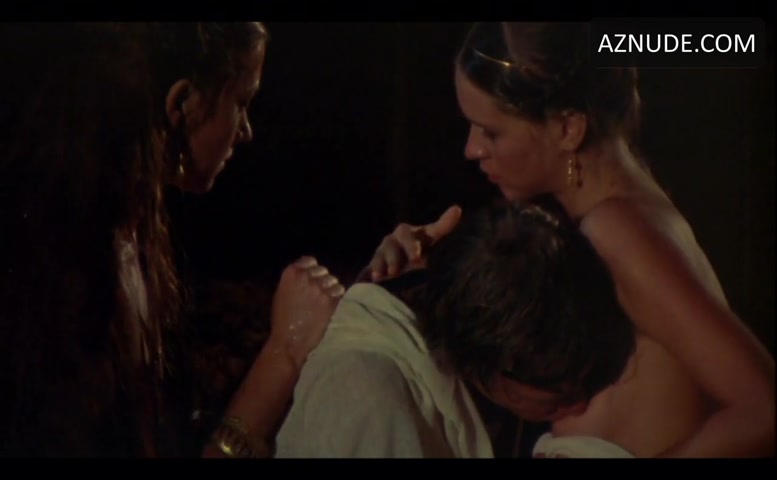
The Roman Emperor Gaius Julius Caesar Augustus Germanicus, better known as Caligula, remains one of history’s most infamous figures, often remembered for his alleged cruelty, sexual excesses, and descent into madness. Ancient sources, particularly the biographies of Suetonius and Tacitus, paint a portrait of a ruler whose reign (37–41 AD) was marked by extravagance, tyranny, and moral decay. However, modern scholarship has increasingly questioned the reliability of these accounts, suggesting that political propaganda, moral outrage, and literary embellishment played significant roles in shaping Caligula’s legacy. Cinematic adaptations—such as the controversial Caligula (1979) or Unlocked Premium’s sex scenes—further distort these narratives, blending historical fragments with sensationalism. Understanding the gap between ancient sources, historical reinterpretations, and modern media requires dissecting the biases of primary texts, the role of propaganda, and how filmmakers exploit—or challenge—these distorted legacies.
Primary Sources on Caligula: Suetonius, Tacitus, and the Problem of Bias

The most detailed accounts of Caligula’s life and reign come from two primary sources: Suetonius’ The Twelve Caesars (written c. 121 AD) and Tacitus’ Annals (completed c. 120 AD). Both works were composed decades after Caligula’s assassination, during a period when the Julio-Claudian dynasty had collapsed, and the Flavian dynasty sought to distance itself from its predecessors’ scandals. Suetonius, a former imperial secretary, compiled gossip, rumors, and official records into a series of biographies, while Tacitus, a senator and historian, focused on political events in his Annals, occasionally referencing Caligula’s behavior.
Suetonius’ The Twelve Caesars is particularly notorious for its lurid descriptions of Caligula’s sexuality. For instance, Suetonius claims that Caligula forced senators’ wives to prostitute themselves, engaged in incestuous relations with his sisters, and even attempted to marry a Vestal Virgin—a sacred duty that required celibacy. However, historians argue that Suetonius’ work is less a factual record and more a mirror of Roman moral values, where emperors were judged by their adherence to traditional virtues. His accounts often reflect social anxieties of his own time rather than historical truth. Tacitus, while more restrained, still portrays Caligula as a tyrant whose cruelty knew no bounds, though his focus remains on political upheaval rather than personal depravity.
"He [Caligula] debauched the girls of the noble families, and even the married women of the senators, and after ravishing them, would send them back with their faces blackened and their dresses torn." —Suetonius, The Twelve Caesars (LXV)
"No crime, no excess of cruelty, whether in secret or in public, was too monstrous for Caligula to commit." —Tacitus, Annals (XII.54)
The tone of these passages is one of moral condemnation, reinforcing the idea that Caligula was not just a bad emperor but a monster. Yet, modern historians such as Robert Graves and Anthony A. Barrett argue that Suetonius’ accounts were deliberately exaggerated to justify the Senate’s eventual purge of imperial power. The lack of contemporary sources (such as letters, official decrees, or eyewitness testimonies from Caligula’s inner circle) further complicates the picture, leaving historians to rely on posthumous propaganda.
Table of Contents
- Historical Context and Misrepresentations of Caligula’s Depravity: Fact vs. Fiction in Cinematic Portrayals
- Primary Sources on Caligula: Suetonius, Tacitus, and the Problem of Bias
- Timeline of Caligula’s Life: Key Events and Their Cinematic Distortions
- Roman Moral Values and the Exaggeration of Caligula’s Sexuality
- Political Propaganda and the Construction of Caligula’s Legacy
- The Evolution of Caligula in Cinema: From Silent Era to Modern Blockbusters
- Chronological Overview of Notable Caligula Films
Timeline of Caligula’s Life: Key Events and Their Cinematic Distortions
Caligula’s life can be divided into distinct phases, each of which has been selectively emphasized or distorted in film and literature. Below is a chronological breakdown of major events, contrasted with their cinematic portrayals:
| Historical Event | Cinematic Portrayal | Discrepancies & Exaggerations |
|---|---|---|
| Birth (31 AD) | Often depicted as a spoiled, brutalized child (e.g., Caligula 1979). | Historical records suggest he was initially popular, with his early military successes (as Germanicus’ heir) earning him affection. |
| Ascension to Power (37 AD) | Shown as a sudden, violent takeover (e.g., Unlocked Premium’s dark tone). | His accession was relatively smooth; Tiberius’ death allowed him to inherit power without immediate resistance. |
| Early Reign (37–39 AD) | Portrayed as a benevolent but increasingly unstable ruler (e.g., I, Claudius). | Suetonius claims he was initially generous, but later accounts emphasize his paranoia and cruelty, possibly due to political purges. |
| Financial Excesses (39–40 AD) | Depicted as reckless spending (e.g., floating bridges, lavish games). | While extravagant, the scale is debated—Suetonius may have exaggerated to criticize imperial waste. |
| Alleged Madness & Assassination (41 AD) | Often shown as a sudden, violent breakdown (e.g., Caligula 1979’s final scenes). | His assassination was likely politically motivated; Cassius Chaerea, a praetorian guard, led the plot, suggesting discontent with his rule rather than personal insanity. |
Key Observations: - Early Popularity vs. Later Tyranny: Films often skip Caligula’s initial charm, focusing instead on his descent into madness. Historically, his early reign was marked by military success and public favor, which only soured as political rivals grew bolder. - Sexual Excesses: While Suetonius describes public orgies and incestuous relations, modern scholars argue these claims were propaganda tools to discredit his rule. No contemporary evidence (e.g., legal records, personal letters) supports these allegations. - Assassination as a Turning Point: Cinematic depictions often glorify his downfall, framing it as inevitable. In reality, his murder was a coup by elites who sought to restore republican ideals—hardly a triumph of justice.
Roman Moral Values and the Exaggeration of Caligula’s Sexuality
Ancient Roman society placed extreme importance on sexual morality, particularly for elite men and women. Emperors were expected to uphold patria potestas (fatherly authority) and pudicitia (chastity), especially in public life. When Caligula allegedly violated these norms, his actions became not just political crimes but moral transgressions that demanded punishment in historical records.
Key Factors in Exaggeration: - Incest Taboos: Roman law prohibited incest among close relatives, and Caligula’s supposed relations with his sisters (Drusilla and Agrippina the Younger) were shocking. Suetonius’ claim that he married Drusilla (a Vestal Virgin) was likely fabricated to emphasize his defiance of sacred laws. - Public Debauchery: Romans valued discreet sexuality among the elite. Caligula’s alleged public orgies and prostitution of noblewomen would have been seen as corrupting the social order, making these claims highly effective in propaganda. - Gender and Power: Female sexuality was highly policed in Rome. Accusations of Caligula raping women served to delegitimize his rule while reinforcing patriarchal control over women’s bodies.
Modern Reinterpretations: Historians like Miriam Griffin and Keith Hopkins argue that Suetonius’ accounts were literary devices rather than factual reports. The lack of contemporary corroboration suggests these stories were rumors spread by enemies rather than historical truth. For example: - No legal records exist of Caligula being prosecuted for incest or rape. - No surviving letters or diaries from his victims or allies describe such events. - Later emperors (e.g., Nero, Heliogabalus) were also accused of similar excesses, yet their cases lack consistent primary evidence.
Political Propaganda and the Construction of Caligula’s Legacy
Caligula’s assassination in 41 AD marked the beginning of the Senate’s attempt to reclaim power from the imperial family. The Julio-Claudian dynasty had already faced criticism for its monarchical tendencies, and Caligula’s rule provided the perfect scapegoat. The Senatorial class, led by figures like Seneca and Cassius Chaerea, used
The Evolution of Caligula in Cinema: From Silent Era to Modern Blockbusters
The portrayal of Emperor Caligula in cinema has undergone a radical transformation since his first appearances on screen in the silent era. Initially depicted through the lens of historical drama, his character has evolved into a symbol of unbridled decadence, power, and sexual transgression, shaped by technological advancements, cultural shifts, and artistic experimentation. From the muted allusions of early 20th-century films to the hyper-stylized excesses of modern exploitation cinema, Caligula’s cinematic journey reflects broader societal attitudes toward sexuality, censorship, and historical revisionism. This evolution is not merely a chronological progression but a testament to how filmmakers have weaponized the emperor’s myth to explore taboos, challenge moral boundaries, and redefine the limits of visual storytelling.
The trajectory of Caligula’s depiction in film mirrors the technological and cultural revolutions that have defined cinema itself. Early portrayals were constrained by rigid censorship laws and limited special effects, forcing filmmakers to rely on suggestion and metaphor. However, as filmmaking techniques advanced—particularly with the advent of CGI, digital cinematography, and unrestricted distribution platforms—Caligula’s on-screen persona became increasingly explicit, blurring the lines between historical accuracy and sensationalism. This shift is evident in the stark contrast between the restrained performances of classical Hollywood and the unapologetic excesses of modern exploitation cinema, where Caligula is often reduced to a caricature of lust and cruelty. Below, the chronological evolution of Caligula in film is examined, highlighting key adaptations, technological influences, and the cultural contexts that shaped their reception.
Chronological Overview of Notable Caligula Films
Caligula’s cinematic history spans over a century, with each era offering distinct interpretations influenced by the prevailing social norms and technical capabilities. The following chronological list outlines major films featuring Caligula, emphasizing those that incorporated explicit or implied sexual content, their box office performance, critical reception, and cultural impact. This overview underscores how the emperor’s portrayal has oscillated between historical reverence and sensationalist exploitation, reflecting the era’s moral and artistic sensibilities.
Films are categorized by decade to illustrate the progression of visual and thematic treatments:
- Silent Era (1910s–1920s): The Birth of a Myth The earliest cinematic depictions of Caligula emerged during the silent film era, when historical epics were a popular genre. These films relied on symbolic imagery and subtle performances to convey the emperor’s alleged madness and depravity, as direct depictions of sexual content were taboo. Notable entries include: - Caligula (1917, directed by Charles Bryant) – A lost silent film that reportedly featured Caligula as a tyrannical ruler, though no explicit scenes survive. Its existence is documented in early film archives, but its content remains speculative. - The Fall of the Roman Empire (1914, directed by Francis Boggs) – While not exclusively about Caligula, this film included his character as part of a broader narrative of Rome’s decline, reinforcing the trope of imperial decadence.
Cultural Impact: These films established Caligula as a figure of historical intrigue but lacked the visual spectacle to explore his sexuality beyond innuendo. The silent era’s reliance on visual metaphor meant that Caligula’s "deviance" was suggested through his erratic behavior rather than explicit content.
- Golden Age of Hollywood (1930s–1950s): Censorship and Code Restrictions The advent of sound and the enforcement of the Hays Code in 1934 imposed strict regulations on sexual content, forcing filmmakers to adopt indirect methods to imply Caligula’s transgressions. Key films from this period include: - I, Claudius (1937, directed by Josef von Sternberg) – A British production that briefly touched on Caligula’s reign, portraying him as a figure of ridicule rather than a sexual predator. The Hays Code’s restrictions limited any exploration of his alleged orgies. - The Robe (1953, directed by Henry Koster) – While not focused on Caligula, this epic reinforced the idea of Rome’s moral decline, indirectly setting the stage for later exploitation films to exploit the emperor’s myth.
Technological Limitations: Without advanced special effects, filmmakers relied on suggestive dialogue, dramatic lighting, and implied off-screen actions to hint at Caligula’s excesses. For example, a scene might show a character whispering about Caligula’s "pleasures" without ever depicting them.
- Exploitation Cinema and the Sexual Revolution (1960s–1970s): Breaking Taboos The sexual revolution of the 1960s and 1970s loosened societal constraints, allowing filmmakers to push boundaries previously deemed unacceptable. This era saw the rise of exploitation cinema, where Caligula became a recurring figure in films designed to shock and titillate audiences. The most infamous example is: - Caligula (1979, directed by Tinto Brass) – Often referred to as the "porno-chic" epic, this film is infamous for its graphic depictions of sexual violence, including scenes of bestiality, group sex, and sadomasochism. It was a box office success in Europe, grossing over $20 million (equivalent to approximately $80 million today) despite being banned in several countries, including the UK and Australia. - Critical Reception: Initially condemned as "softcore pornography," the film has since been reevaluated as a satirical commentary on power and decadence. Critics like Roger Ebert initially panned it but later acknowledged its cultural significance as a product of its time. - Cultural Impact: The film’s release coincided with the decline of the Hays Code and the rise of adult cinema. It became a cult classic, influencing later exploitation films and inspiring parodies, such as Caligula: The Lion of Rome (1981), a direct-to-video sequel that further exaggerated the emperor’s sexual exploits.
Creative Workarounds: Filmmakers like Tinto Brass used long takes, voyeuristic camera angles, and non-linear storytelling to justify explicit content under the guise of artistic expression. The film’s production design—opulent sets, elaborate costumes, and over-the-top performances—served as a deliberate contrast to its graphic content, creating a tone of ironic decadence.
- Modern Blockbusters and Historical Epics (1980s–2000s): Balancing Spectacle and Sensationalism The 1980s and 1990s saw a shift toward more historically grounded portrayals, though exploitation elements persisted in niche productions. Notable films include: - Caligula (1981, directed by John Gray) – A direct-to-video sequel to Brass’s film, this entry doubled down on explicit content, featuring scenes of gladiatorial sex, incest, and necrophilia. It was marketed as a "hardcore" follow-up but failed to achieve the cultural impact of its predecessor. - I, Claudius (1976 BBC Miniseries, directed by Herbert Wise) – While not a film, this acclaimed television adaptation portrayed Caligula as a tragic figure rather than a sexual predator. The miniseries’ restrained approach to his character reflected its aim to present a historically plausible narrative. - Master and Commander: The Far Side of the World (2003, directed by Peter Weir) – Briefly mentioned Caligula’s reign as part of a broader historical backdrop, reinforcing his image as a symbol of imperial excess without delving into his personal life.
Technological Advancements: The introduction of digital effects and CGI in the late 20th century allowed filmmakers to create visually stunning but historically dubious depictions of Caligula’s orgies. For example, Caligula (2008, a lesser-known direct-to-DVD film) used CGI to depict fantastical scenes of sexualized monsters and supernatural beings, blending historical fiction with horror elements.
- Streaming Era (2010s–Present): Niche Accessibility and Reinterpretation The rise of streaming platforms has democratized access to controversial films, allowing niche productions to find audiences without relying on traditional theatrical releases. Recent entries include: - Caligula: The Untold Story (2018, directed by Marcus Nispel) – A direct-to-video film that combined historical drama with exploitation tropes, featuring CGI-enhanced scenes of sexual violence. It was marketed primarily to fans of adult cinema and historical epics. - Rome (2018, HBO Series) – While not focused on Caligula, the series briefly depicted his reign, offering a more nuanced portrayal that aligned with modern historical interpretations. The show’s success demonstrated a growing audience appetite for historically grounded but visually immersive storytelling.
Cultural Legacy: Streaming platforms have enabled older exploitation films, such as Caligula (1979), to reach new generations. On platforms like Shudder, Mubi, and Tubi, these films are often
The search for Caligula’s "unlocked" sex scenes exposes more than just forbidden footage—it lays bare the collision of history, censorship, and artistic license that has shaped public memory for centuries. While modern scholarship peels back layers of Roman propaganda, films continue to weaponize Caligula’s legend, turning his alleged depravity into a template for exploring humanity’s darkest impulses. As streaming platforms democratize access to these controversial works, the challenge lies in distinguishing between exploitation and art—a debate as old as cinema itself.
Leave a Comment
Comments are moderated before appearing. The data you submit is processed according to the Privacy Policy of Aamipark.